


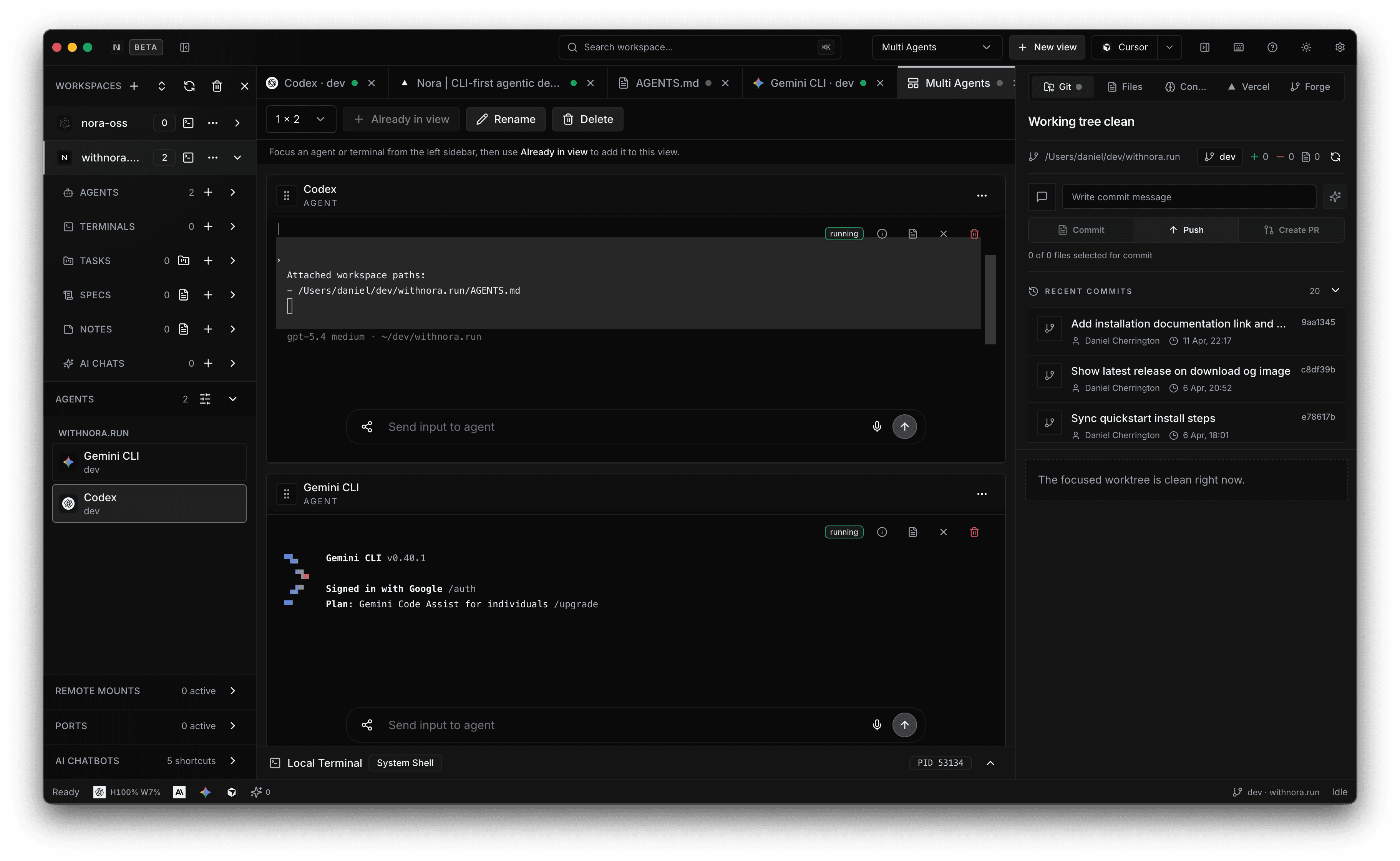
Scope
Scope
Execution boundaries and constraints
$ operating path
Scope
Execution boundaries and constraints
Spec
Requirements and acceptance criteria
Tasks
Actionable units with ownership
Agents
Parallel implementation in worktrees
Diffs
Review and validation checkpoints
PR
Approval-ready pull request
$ handoff
Keep the brief, current repo state, and task intent intact as work moves between agents instead of restarting the conversation every time a different tool takes over.
Flow
$ scope
Start from the shape of the work itself and let Nora break that into actionable units instead of manually rewriting the same plan for every agent session.
Planning
$ workflow
Assign who builds, who reviews, and what done looks like. Nora runs the cycle automatically—implement, review, revise—until every acceptance criterion passes.
Goal loop
$ skills
Use a skill manager to bring specialized instructions and workflows into the session without bloating the default agent prompt.
Extensions
$ scaffolding
Pick a stack—Next.js, Vite, Expo—and bolt on auth, UI kits, and database layers in a guided flow instead of copying boilerplate by hand.
New project
$ worktrees
Keep experiments, edits, and reviews separate by default so parallel work does not turn the main branch into a collision zone.
Repo isolation
$ file editing
Apply targeted edits where the work is happening instead of bouncing between disconnected tools. Nora keeps file editing in the same operational surface as the rest of the run.
Editing
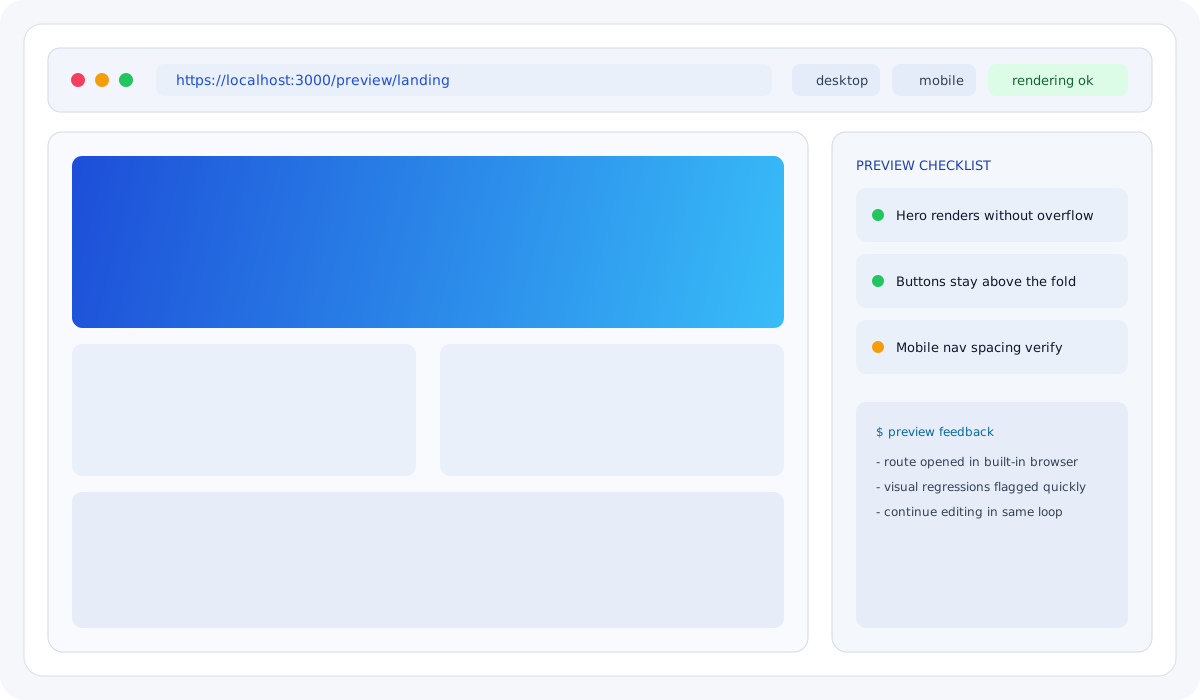
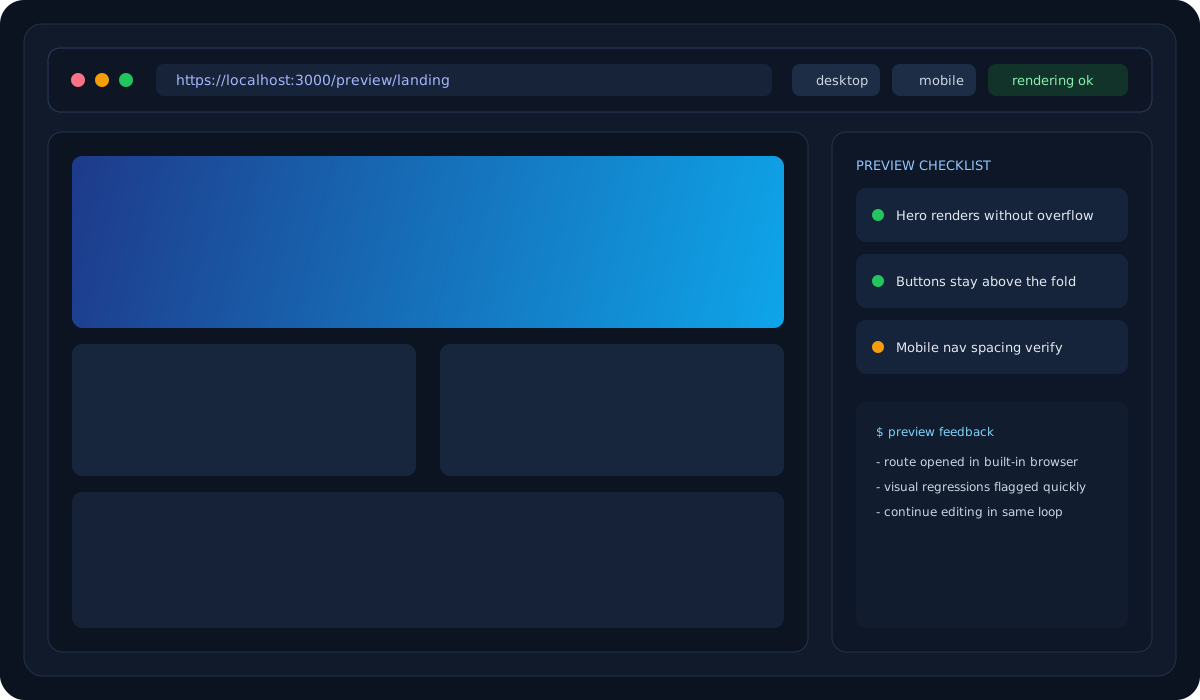
$ browser preview
Preview routes, verify UI behavior, and check rendered output without leaving Nora. The built-in browser keeps visual validation inside the same loop as agent execution.
Preview
$ browser annotation
Select any element in the live preview, leave precise feedback, and Nora packages the DOM context and your notes into a task an agent can implement directly.
Visual review
$ diffs
Inspect exactly what changed, keep reviews explicit, and catch regressions earlier. Diff visibility is built into the workflow so operator approval stays grounded in code.
Review
$ screenshots
Bring visual context directly into CLI agent workflows. Nora lets you paste screenshots into terminal-based agents, which is not something they support natively on their own.
Visual context
$ voice dictation
Most agent TUIs only accept keyboard input. Nora transcribes your speech and injects it into the active session so you can prompt terminals and agents hands-free without waiting for native voice support in each tool.
Universal input
$ ide handoff
Use Nora as the operating layer, then jump into your preferred editor for deeper inspection, local debugging, or final polish without losing the thread of the work.
Preferred editors

$ remote
Remote work should feel first-class. Nora is being shaped around SSH mount management so remote repositories can be operated on with the same clarity as local ones.
Remote mode
$ integrations
Source control and deployment need to stay in the same flow. GitHub and Vercel integrations are part of the working surface, not an afterthought.
Connected stack

$ visibility
Track active agents, task status, ownership, and repo progress in a layout that is meant for operating a system, not just reading a transcript.
Control plane
$ popular topics
A workspace layer for teams using Claude Code with local repos, isolated worktrees, operator approvals, and reviewable execution.
A structured local workspace for Codex-style development with isolated branches, clear operator control, and repository-aware execution.
Operate local AI coding agents against real repositories with worktree isolation, session visibility, and operator-controlled workflows.
Use Git worktrees to run AI coding agents in parallel without colliding on the same branch or working directory.
Structure agentic development with local agents, task framing, worktrees, explicit approvals, and reviewable changes.
$ comparisons
A comparison of Nora and Cursor for teams evaluating AI coding workflows, local agent operation, worktree isolation, and operator control.
A comparison between Nora and a raw Claude Code terminal workflow for teams evaluating structure, worktree isolation, review, and repository visibility.
How Nora compares with generic AI IDEs when the main requirement is operating agentic development workflows rather than just adding AI to editing.
$ faq
A quick overview of what Nora does, who it is for, and how it fits into an agent-driven development workflow.
Nora is a CLI-first workspace for running agentic development workflows with local agents, isolated worktrees, and explicit operator control.
Nora works with coding agents like Claude Code, Codex, Gemini, Cursor, Grok Build, OpenCode, Kimi, and more—giving them a shared operational workspace instead of separate silos.
Yes. Nora is designed around local-first execution so you can operate agents against your repository with direct visibility into files, diffs, and task ownership.
Separate worktrees let multiple agents explore, edit, and review in parallel without stepping on the same branch, which makes merges and human approvals much cleaner.
$ ade vs ide
capability
nora
ides & wrappers
Single control plane for multiple live coding agents
Nora
yesIDEs & wrappers
noAgent-to-agent handoff with preserved task context
Nora
yesIDEs & wrappers
noCross-agent task orchestration from one operator surface
Nora
yesIDEs & wrappers
noTerminal-native screenshot context for CLI agents
Nora
yesIDEs & wrappers
noWorktree-isolated parallel execution as the default model
Nora
yesIDEs & wrappers
noIn-loop browser preview tied directly to agent workflow
Nora
yesIDEs & wrappers
noShared operational view of ownership, progress, and outputs
Nora
yesIDEs & wrappers
noRepo operations, diffs, and agent runs in one execution layer
Nora
yesIDEs & wrappers
no