
Nora for Codex workflows
Codex-style tools are strongest when they operate inside a disciplined workspace. Nora adds that structure with local repos, worktree isolation, task framing, and clean human review points.
Codex-style execution inside a real repository workspace.
Cleaner branch, diff, and task boundaries for agent work.
A more reviewable operator workflow than raw terminal sessions alone.
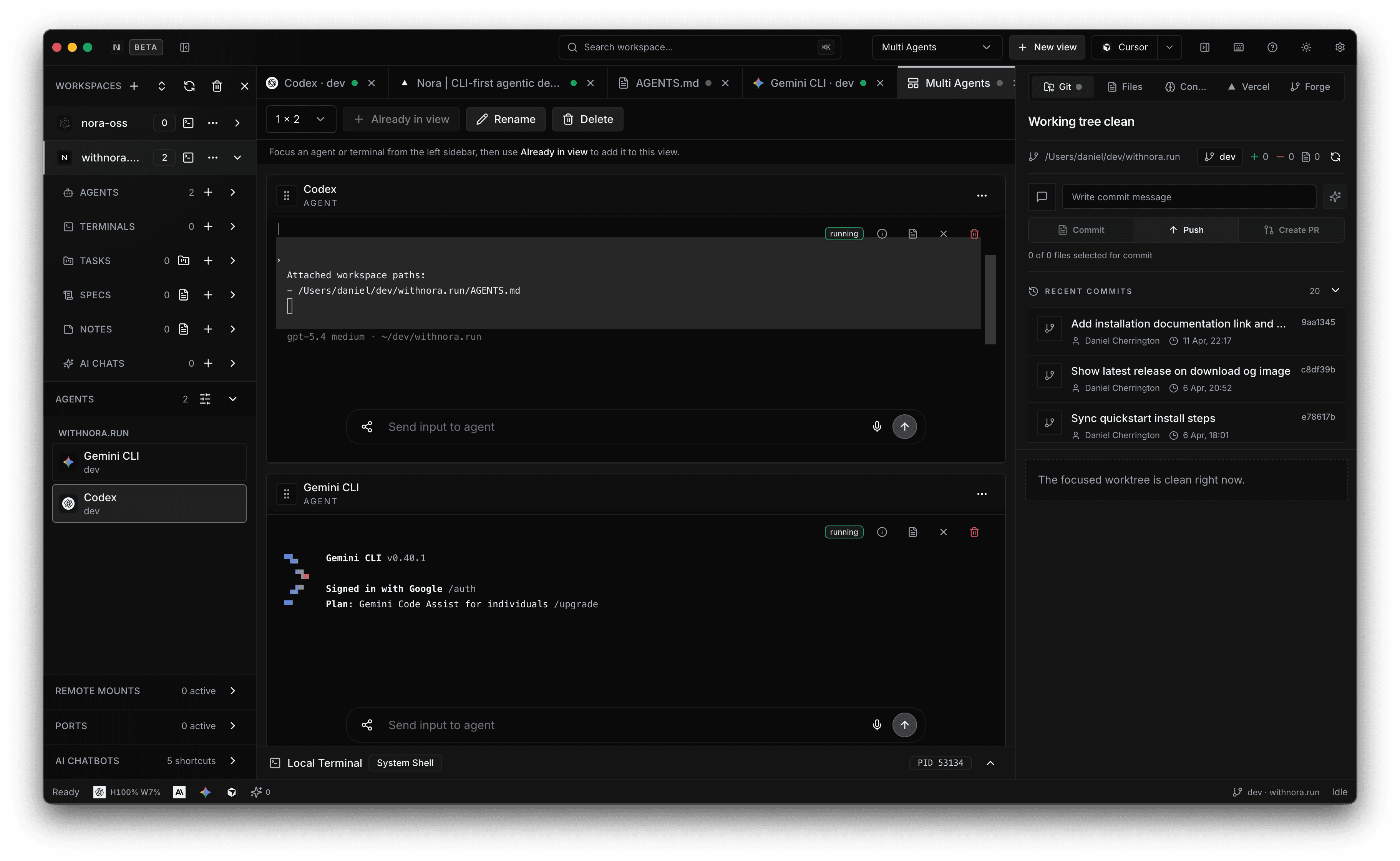
The problem with raw agent sessions
Direct agent sessions can edit code, but they do not automatically create a durable operating model. Teams still need task boundaries, a visible file state, clear branch separation, and a place for approvals and diffs.
- Session output is not enough when multiple changes overlap.
- Repository state needs to stay legible to the operator.
- Parallel work becomes brittle without branch isolation.
How Nora improves Codex use
Nora keeps the repository state visible, runs agents against real worktrees, and makes changes easier to inspect before they move forward. That lowers the risk of hidden drift and makes parallel work more manageable.
- Diffs stay attributable to a specific session or task.
- Worktree separation reduces accidental branch conflicts.
- Approvals and inspection happen before code moves downstream.
Suggested docs
If you are evaluating Nora for Codex-style workflows, start with the workspace model, tasks, specs, and repo tools pages. They explain the product model better than a generic feature list.
- Read the workspace model first.
- Then move into tasks, specs, and repo tools.
- Use quickstart to test the model against a real repository.
Does Nora only work with one coding agent?
No. Nora is designed as a shared workspace layer around multiple agent CLIs and agentic development workflows.
What is the main benefit for Codex-style workflows?
The main benefit is operational structure: visible repository state, worktree isolation, and clearer human review around agent output.